-
March 13, 2018 •
Aktuelt, Journalistiske prosjekt, Mediepolitikk, Teknologi •
by Rasmus Kleis Nielsen
In many countries over the past few years, the political process – and social cohesion – have been threatened by various forms of disinformation, sometimes misleadingly and inadequately called “fake news”. Politically-motivated and...
Read article
-
March 8, 2018 •
Aktuelt, Digitale nyhende, forsking, Journalistiske prosjekt, Teknologi •
by Caroline Lees
Journalists and computer scientists are working to develop automated fact-checking (AFC) to enable large-scale responses to online misinformation, according to a new Factsheet by the Reuters Institute for the Study of Journalism (RISJ)....
Read article
-
February 1, 2018 •
Aktuelt, Etikk & Kvalitet, Forsking •
by Caroline Lees
The first research into false news sites in Europe reveals that fake news sites in France and Italy have a far more limited reach than is often assumed. Engagement with these websites is also very low compared to most established news...
Read article
-
August 18, 2017 •
Aktuelt, Etikk & Kvalitet, Mediepolitikk •
by Zuzana Veselková
Freedom to publish on the internet and the expansion of social networks have brought unprecedented communication possibilities to the Czech Republic, as well as an influx of fake news, hoaxes, and disinformation. Campaigners draw attention...
Read article
-
March 2, 2017 •
Etikk & Kvalitet, Mediepolitikk, Siste nytt •
by Halyna Budivska
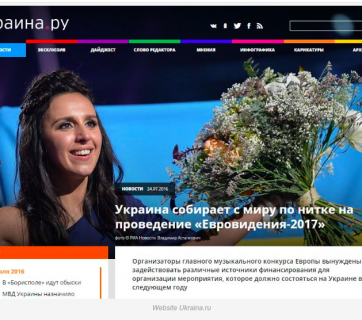
“Ukrainian radicals beat up children for speaking Russian” (FAKE); “University student expelled for asking President Poroshenko an ‘uncomfortable question’” (FAKE); “Ukrainian Armed Forces recruited mercenaries from...
Read article
-
May 12, 2015 •
Forsking, Notisar •
by Stephan Russ-Mohl
An alarm signal is sounding from Italy. Media researchers there have analysed how misinformation and conspiracy theories spread via social networks, such as Facebook, much faster than news from more reliable sources. A team of researchers,...
Read article